
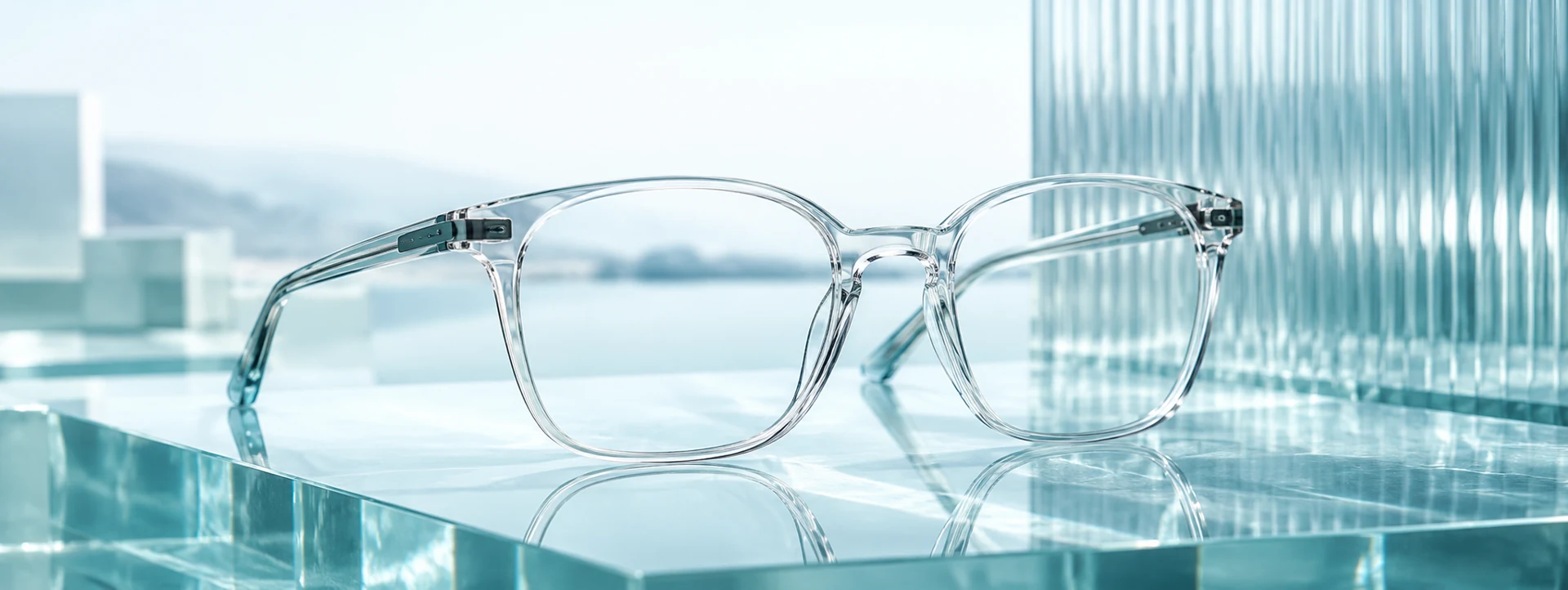
At Optika Rodenstock, we offer prescription glasses with mineral glass or plastic lenses. We consider your prescription, frame, lens weight and daily use together, whether you need glasses for reading, work or everyday wear.
Mineral glass or plastic lenses?
People often call spectacle lenses “glasses”, even when the lenses are plastic. We offer both materials; the exact specification and delivery time are confirmed for your order.
| Consideration | Mineral glass lenses | Plastic lenses |
|---|---|---|
| Weight | Usually heavier, particularly noticeable with larger frames. | Usually lighter and comfortable for longer wear. |
| Scratching | A hard surface with good natural scratch resistance. | A softer surface; a hard coating improves scratch resistance. |
| Impact | More brittle. Usually unsuitable where impact is a concern. | Generally more resistant to breakage; performance depends on the material. |
| Thickness | A high index can give a thinner lens, but not necessarily a lighter one. | Different indices are available; prescription and frame size also affect thickness. |
| Tinting | Options depend on the lens and its treatment. | Often offers a wider choice of tints and treatments. |
Neither material is completely scratchproof or unbreakable. Everyday prescription glasses do not replace certified protective eyewear for work or sport. Source: ZEISS
Lens designs, refractive index and coatings
Single-vision and progressive lenses
Single-vision lenses correct vision for one working distance. Progressive lenses combine distance, intermediate and near zones without a visible dividing line. The right design depends on your prescription and daily activities. Source: NEI
What does a thinner lens mean?
Refractive index is a property of the material. A higher index can reduce thickness for the same prescription, but frame size and lens positioning also matter. CR-39, polycarbonate and high-index plastics have different balances of weight, optical properties and resistance. Source: EyeWiki / AAO
Anti-reflective and hard coatings
An anti-reflective coating reduces surface reflections; a hard coating improves scratch resistance. These are different functions. Ask which treatments are included in the lenses you are considering. Source: ZEISS
Frame materials and styles
Acetate allows expressive colours and thicker outlines, while metal frames often have a finer profile. Titanium is known for its low weight. These are categories to compare; we confirm the material, brand and availability of each model in the shop.
Round, rectangular or cat-eye?
Round and oval shapes give a softer outline; rectangular and geometric frames create a more defined contour. Cat-eye frames have upswept outer corners, while aviator styles often feature a distinctive double bridge. Trying frames on matters more than a strict rule about face shape.
Check comfort on your face
A frame should sit securely on your nose and behind your ears without pressure. Width, bridge fit and temple length matter as much as colour. With a stronger prescription, discuss frame size before choosing lenses.
Making your glasses, magnetic clips and care
We offer frames with magnetic sun clips, as well as tinted prescription and photochromic lenses. The clip must fit the exact frame model.
Our one-hour glasses service covers measurement, lens cutting and mounting. Call first: the time depends on your prescription, material, treatments and availability.
Keep your glasses in a case and follow the care instructions for your lenses. Read our guide to cleaning and storing glasses.
Prescription glasses: your questions
Do you offer both mineral glass and plastic lenses?
Yes. Optika Rodenstock offers both materials for prescription glasses. We agree the material, treatments and delivery time according to your prescription and chosen frame.
Which lenses are lighter?
Plastic lenses are usually lighter than mineral glass lenses. Total weight also depends on the prescription, lens size and frame.
Can mineral glass lenses get scratched?
Yes. Mineral glass has good natural scratch resistance, but it is not indestructible. Both mineral glass and plastic lenses need careful cleaning and storage.
Is a higher refractive index always better?
No. Thinner lenses are not automatically the best choice for every prescription. We compare thickness, weight, optical properties, the frame and your budget.
Can every pair be ready in one hour?
Not every order. The service depends on your prescription, chosen lenses and stock. Call +389 76 406 506 before visiting to check availability.
Can prescription glasses have a sun attachment?
Yes, we offer frames with magnetic sun clips. Tinted prescription lenses and photochromic options can also be ordered; we confirm suitability for your particular frame.
Sources and further reading
- ZEISS: glass and plastic lenses
- NEI: types of prescription glasses
- AAO EyeWiki: optical material properties
- Specsavers: frame features
These sources explain general concepts. Citing a manufacturer does not confirm stock or a partnership. Current models and specifications are checked in the shop.
Choose with personal advice
Talk to Meri, our optician and optometrist. Call for an appointment or to check a particular order at Vero, Nova Bitola.
Call to bookEnglish edition:
 Call to book · +389 76 406 506